Bangkok offers a wide range of transportation options, including the BTS Skytrain, MRT subway, taxis, Grab, tuk-tuks, and river boats.
This guide explains the best ways to get around Bangkok, when to use each transportation option, typical fares, and practical travel tips. You’ll also find links to detailed guides to help you travel around the city with confidence.
How to Get Around Bangkok
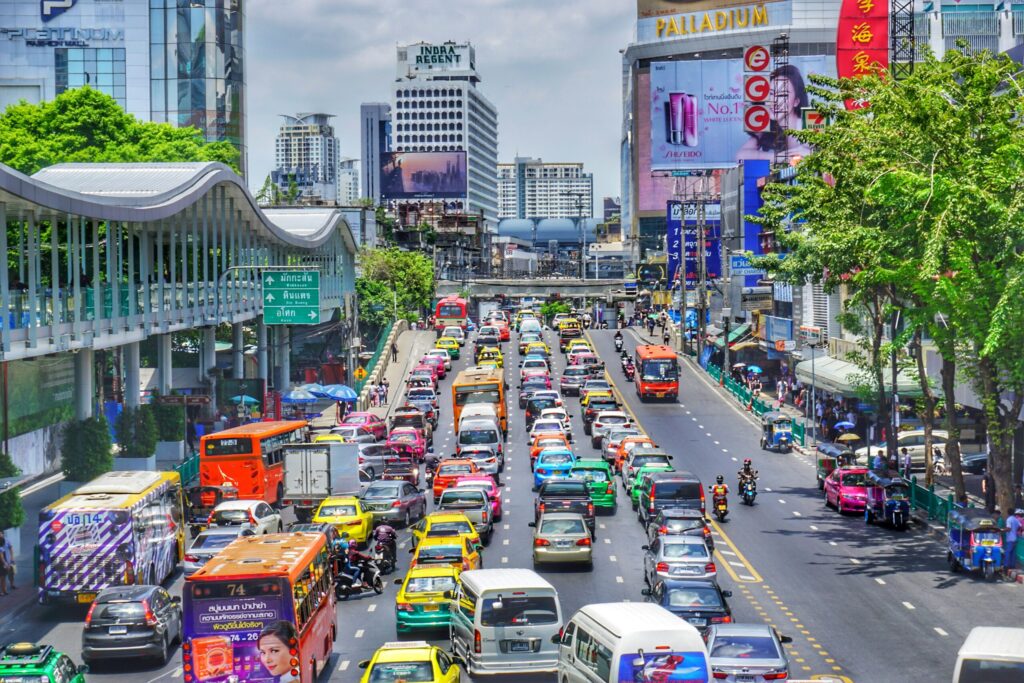
Bangkok offers a wide range of transportation options, including the BTS, MRT, taxis, Grab, tuk-tuks, and river boats. Combining public transportation with Grab or taxis is the easiest way to get around the city.
Is Bangkok Easy to Get Around?
Yes. Bangkok is easy to get around, even for first-time visitors. The BTS and MRT connect many popular attractions, while taxis and Grab provide convenient access to places beyond the rail network.
Although traffic can be heavy during rush hour, choosing the right transportation can save both time and money.
Quick Comparison of Bangkok Transportation
| Transportation | Best For | Typical Fare | Pros |
|---|---|---|---|
| BTS Skytrain | Shopping areas and city center | 17–62 THB | Fast, reliable, avoids traffic |
| MRT Subway | Old Town, Chatuchak, business districts | 17–45 THB | Comfortable and easy to use |
| Taxi | Door-to-door travel | From 35 THB | Convenient with luggage or groups |
| Grab | Easy booking and cashless payment | Varies by distance and demand | Fixed fare shown before booking |
| Tuk-Tuk | Short sightseeing rides | Negotiable | Fun local experience |
| Chao Phraya Express Boat | Riverside attractions | 16–45 THB | Scenic and avoids road traffic |
In most cases, the fastest way to get around Bangkok is to combine the BTS or MRT with Grab or a taxi for the last part of your journey.
BTS and MRT (Best for Most Tourists)
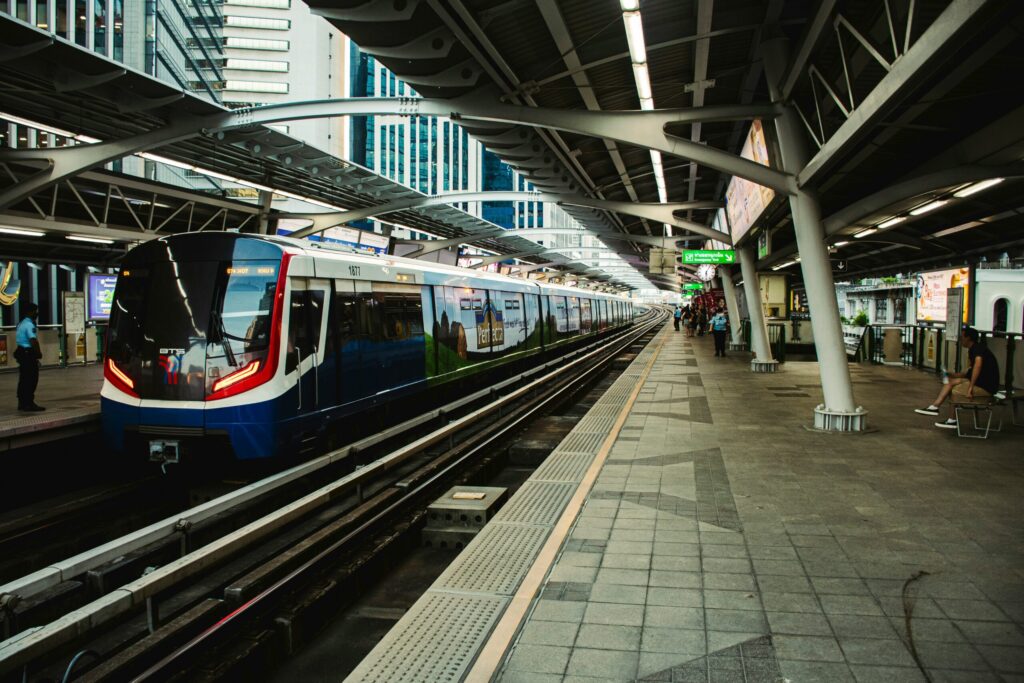
The BTS Skytrain and MRT are the fastest and most reliable ways to get around Bangkok. They connect many of the city’s most popular attractions, shopping malls, and business districts while avoiding the city’s heavy traffic.
For most visitors, the BTS and MRT are the best transportation options for sightseeing and everyday travel.
Where the BTS and MRT Go
The BTS Skytrain serves popular areas such as Siam, Sukhumvit, Silom, and Mo Chit, making it ideal for shopping, dining, and visiting major attractions.
The MRT connects areas including Chatuchak Market, Chinatown, Hua Lamphong, and the cultural district. Several interchange stations allow easy transfers between the BTS and MRT.
👉Related guides:Rabbit Card Guide
Tickets and Fares
BTS fares range from 17–62 THB, while MRT fares range from 17–45 THB, depending on the distance traveled.
Single-journey tickets are available at every station. Frequent visitors may find a Rabbit Card convenient for BTS travel, while MRT also accepts contactless credit cards at many stations.
When to Use BTS or MRT
Choose the BTS or MRT whenever your destination is close to a station. They are usually the fastest option during rush hour and are ideal for visiting shopping malls, markets, and many of Bangkok’s top attractions.
For destinations farther from a station, combine the rail network with Grab or a taxi for the last part of your journey.
Klook.comTaxi, Grab, and Tuk-Tuks
Taxis, Grab, and tuk-tuks are convenient options when traveling beyond the BTS and MRT network.
They are especially useful for reaching hotels, restaurants, or attractions that are not within walking distance of a station.
Taxi vs Grab in Bangkok
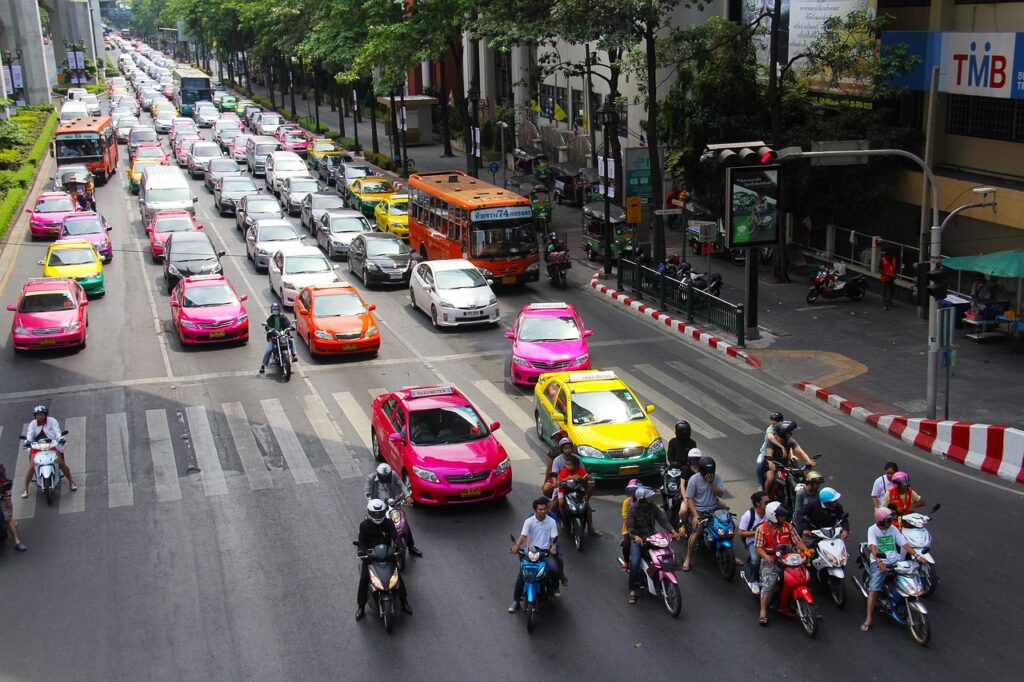
Both taxis and Grab are widely available in Bangkok, but each has its advantages.
Taxis are usually the cheapest option, with fares starting at 35 THB. However, some drivers may refuse to use the meter, especially in tourist areas.
Grab lets you book a ride through the app and shows the fare before your trip begins. While it may cost more during busy periods, many visitors prefer Grab for its convenience and cashless payment options.
Choose a taxi if the driver agrees to use the meter. Choose Grab if you want a fixed fare, easy booking, or don’t want to negotiate.
When to Take a Tuk-Tuk
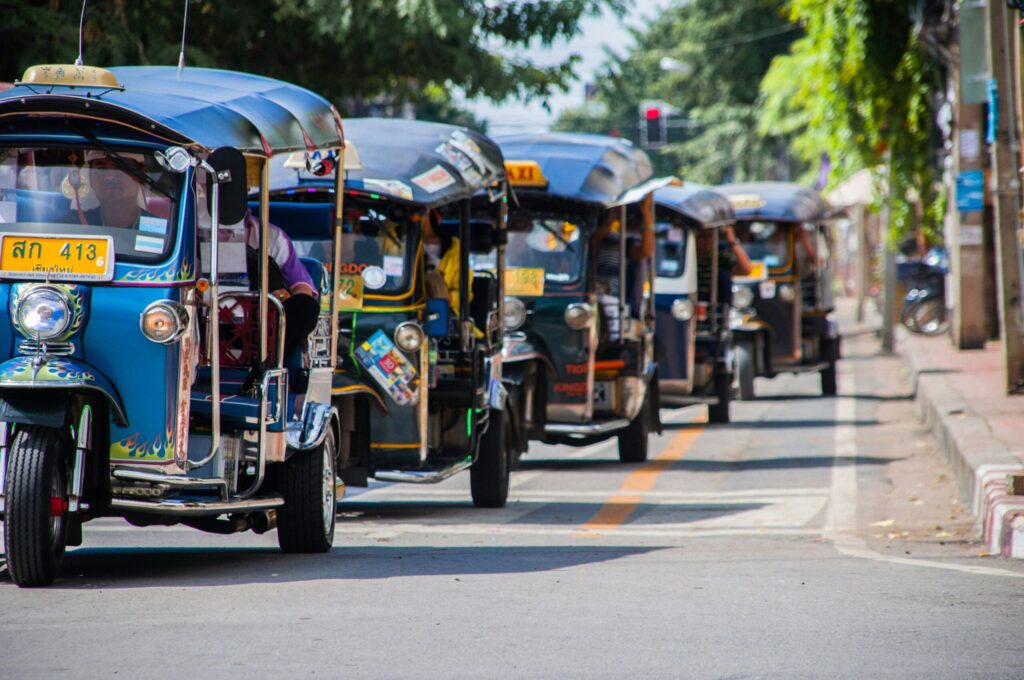
Tuk-tuks are one of Bangkok’s most iconic forms of transportation and are a fun way to experience the city on short trips.
Fares are not metered, so always agree on the price before getting in. Although tuk-tuks usually cost more than metered taxis, many travelers enjoy riding one at least once during their visit.
River Boats in Bangkok


River boats are a convenient way to explore attractions along the Chao Phraya River while avoiding Bangkok’s traffic.
They are affordable, scenic, and can easily be combined with the BTS for convenient travel around the city.
Chao Phraya Express Boat
The Chao Phraya Express Boat is one of the most affordable ways to visit riverside attractions such as the Grand Palace, Wat Arun, Wat Pho, and ICONSIAM.
Boats operate throughout the day and stop at many piers along the river.
Tourist Boat
The Chao Phraya Tourist Boat is designed for sightseeing and stops at many of Bangkok’s most popular riverside attractions. It offers hop-on hop-off access, making it easy to explore places such as the Grand Palace, Wat Arun, Wat Pho, and ICONSIAM at your own pace.
Although the fare is higher than the regular Chao Phraya Express Boat, it’s a convenient choice for first-time visitors who plan to visit multiple attractions in one day.
When River Transport Is the Best Option
River transport is ideal for visiting attractions along the Chao Phraya River or avoiding Bangkok’s busy roads. It also connects conveniently with the BTS at Saphan Taksin Station, making it easy to combine rail and boat travel.
For destinations away from the river, the BTS, MRT, taxi, or Grab are usually more convenient.
👉If you’re looking for the best way to get from Suvarnabhumi Airport (BKK) or Don Mueang Airport (DMK) to the city, check out our detailed airport transportation guides.
Frequently Asked Questions
Conclusion
Getting around Bangkok is easy once you know which transportation option to use. The BTS Skytrain and MRT are the fastest ways to avoid traffic, while taxis and Grab are ideal for door-to-door travel. If you’re exploring riverside attractions, the Chao Phraya Express Boat and Tourist Boat offer a convenient and scenic alternative.
Choose the transportation that best fits your destination and travel style, and don’t forget to check our detailed guides for fares, routes, and travel tips. With a little planning, you’ll be able to explore Bangkok safely, efficiently, and with confidence.